
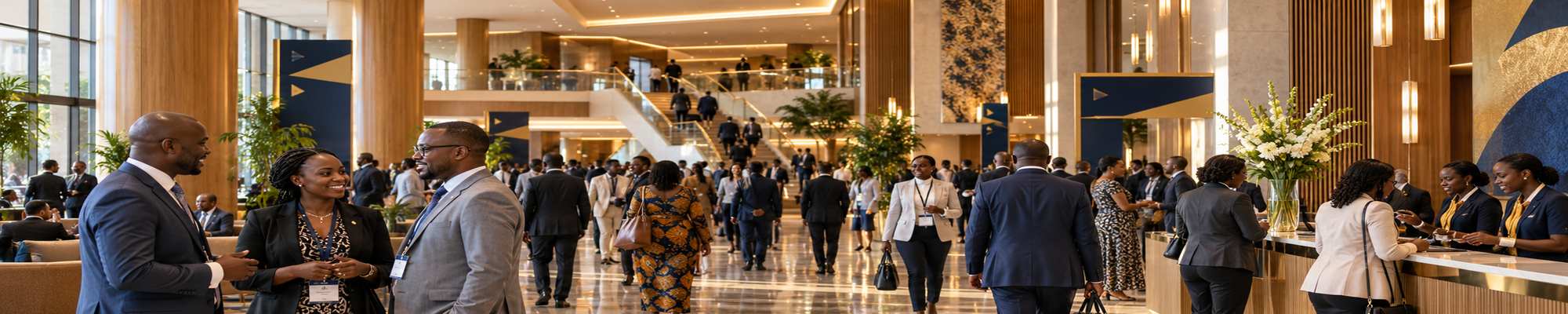

A convention centre can demonstrate that a destination has the space to host an international conference. The association considering that destination still has a wider decision to make.
It needs to understand whether its members can participate, whether the meeting can fulfil its professional purpose and whether the proposed arrangements are dependable. The venue is central to that assessment, but it is one part of the offer.
For Kenya and East Africa, I believe conference competitiveness should be assessed across the full experience of hosting and attending a meeting. That means considering the professional community, the practical arrangements and the capacity of the partners involved alongside the facilities.
A useful starting point is to look at the destination through the association’s eyes.
Understand what this particular conference requires
Different meetings place different demands on a destination. A medical congress with several parallel sessions, an exhibition and specialist technical requirements will need a different arrangement from a smaller professional meeting built around discussion and field visits.
Capacity should therefore be assessed against the actual programme. A venue may accommodate the total attendance while still presenting difficulties with breakout rooms, exhibition circulation or the timing of sessions.
The assessment should consider how the spaces will work together. Are rooms suitably located? Can delegates move between sessions comfortably? Are interpretation, connectivity and accessibility requirements understood? Can exhibitors and suppliers operate within the proposed schedule?
These questions help establish whether the venue suits the conference. They also identify where additional arrangements or costs may be needed.
The destination’s proposition becomes more credible when it explains how the meeting will function, with evidence that the requirements have been examined.
Consider the delegate’s complete journey
The experience of attending begins before a delegate reaches the convention centre.
A prospective participant may need to assess travel options, entry requirements, accommodation costs and the time involved in getting to the meeting. Institutions deciding whether to fund attendance may consider the full cost of participation.
The host team should examine that journey for delegates arriving from different regions and with different needs. Travel convenience for one group may be less straightforward for another.
Accommodation also needs closer attention than a count of available rooms. The relevant questions include price ranges, proximity to the venue, transport arrangements and availability during the proposed dates. Early-career professionals and delegates with limited institutional funding may need options that differ from those preferred by senior participants.
Clear information helps delegates make informed decisions. Where there are constraints, the bid should explain the practical response rather than leave the association to discover the issue later.
Accessibility should be considered throughout the journey, including arrival, transport, accommodation and participation within the venue.
Give the meeting a meaningful local connection
An international conference brings a professional community together. Its location can contribute to the programme when there is a relevant connection with local expertise and institutions.
For a research congress, that might involve universities, specialist institutes or opportunities for professional exchange. For an association meeting, it may include engagement with local members and their work.
The connection needs to be specific. Listing institutions in a proposal does not establish their involvement. The host team should understand who is willing to participate, what they can contribute and how that contribution supports the association’s objectives.
For destinations in Kenya and East Africa, this offers a practical way to develop a distinctive hosting proposition. The case can explain why this professional community would benefit from meeting here and what the local community would bring to the exchange.
That contribution should be reflected in workable programme ideas and confirmed relationships, rather than broad promises about regional impact.
Show how the destination will work together
An association needs confidence in the arrangements surrounding the venue. That includes accommodation partners, transport providers, technical teams, the local host and any other organisations carrying responsibilities.
The proposal should make those responsibilities clear. Who coordinates the destination’s response? Who provides reliable information? Who resolves a problem that involves several partners?
A single contact can make communication easier, provided that person has access to the organisations responsible for delivery. The underlying coordination still needs to exist.
Site visits can be particularly useful when they test the proposed arrangements. Alongside viewing the venue, the association should be able to examine delegate movement, meet the relevant partners and discuss outstanding requirements.
This is also an opportunity to identify assumptions that need checking. A realistic assessment gives both parties a better basis for deciding whether the destination is suitable.
Build confidence through evidence
A destination does not need to claim that every requirement is already resolved. It does need to distinguish confirmed arrangements from those still being developed.
Venue availability, partner commitments, indicative costs and proposed support should be presented accurately. Where a requirement remains outstanding, the bid should identify who will address it and when.
For institutions and destinations seeking more international conferences, this wider assessment is valuable before substantial resources are committed to a bid. It can reveal which opportunities fit, where preparation is needed and which promises the host team is ready to make.
A strong venue creates possibilities. The complete destination offer helps an association judge whether those possibilities can become a successful meeting.
The task is to demonstrate that delegates can participate, the professional programme can succeed and the hosting partners can fulfil their responsibilities. That is what turns a facility into a credible conference proposition.